
Dealing with catarrh or constant nasal congestion can be really uncomfortable. It affects how you breathe, how you sleep, and even how you feel throughout the day. That blocked feeling, the mucus, the need to keep clearing your throat — it can be frustrating.
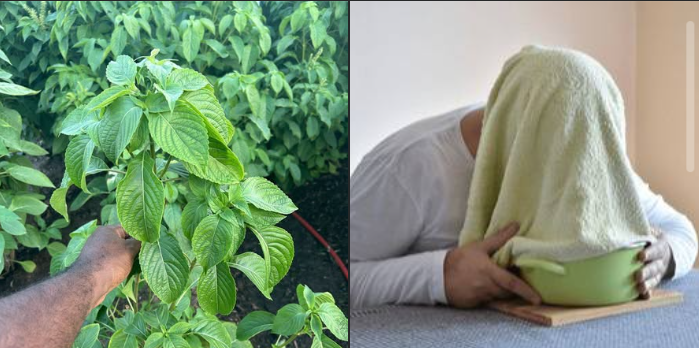
While medications are available, many people also look for simple, natural ways to feel better at home. One method that has been used for years in many African homes is steam inhalation with scent leaves (African basil).
It’s simple, affordable, and for many people, it brings noticeable relief — especially when used the right way.
What Exactly Is Catarrh?
Catarrh is basically a build-up of mucus in the nose, sinuses, or throat. It usually happens when your body is reacting to something.
Common causes include:
- Cold or flu infections
- Allergies (like dust or pollen)
- Exposure to smoke or pollution
- Sinus irritation or inflammation
When the mucus becomes thick and doesn’t drain properly, it can lead to:
- Blocked nose
- Post-nasal drip
- Headaches or facial pressure
- Difficulty breathing clearly
Why Steam Inhalation Helps
Steam inhalation has been used for a long time across different cultures — and for good reason.
The warm, moist air helps to:
- Loosen thick mucus so it can drain more easily
- Soothe irritated nasal passages
- Open up the airways
- Make breathing feel easier
When you add scent leaves, the steam carries their natural aroma, which many people find calming and refreshing.
Some studies suggest steam can help with short-term relief, although results may vary from person to person. So while it’s not a cure, it can be a helpful supportive method.
Why People Use Scent Leaves
Scent leaves (also known as African basil) are commonly used in cooking, but they’ve also been part of traditional home remedies for a long time.
They contain natural compounds that give them their strong smell. When used in steam:
- The aroma can feel soothing
- It may help you feel less congested
- It adds a natural element to the process
Many people grew up seeing this used at home — and still rely on it today.
How to Do Steam Inhalation with Scent Leaves
What you need:
- A handful of fresh scent leaves
- 4–6 cups of water
- A bowl or bucket
- A towel
Steps:
- Wash the scent leaves properly
- Boil them in water for about 15–20 minutes
- Pour the hot water into a bowl
- Sit comfortably and place your face above the bowl
- Cover your head with a towel to trap the steam
- Breathe in slowly through your nose for 5–10 minutes
Afterward, gently blow your nose to help clear loosened mucus.
👉 You can do this once or twice daily when you’re congested.
Safety Tips (Very Important)
Steam is helpful — but you need to be careful.
- Don’t use extremely hot or boiling water
- Keep a safe distance to avoid burns
- Don’t stay too long if it feels uncomfortable
- Always supervise children
If you have asthma or breathing issues, it’s better to speak to a doctor first.
When This Is Not Enough
Natural remedies can help with mild symptoms, but they’re not always enough.
You should see a doctor if:
- Symptoms last more than 1–2 weeks
- You have severe pain or swelling
- You notice thick, discolored mucus
- Breathing becomes difficult
Other Simple Ways to Support Your Breathing
Steam works best when combined with other healthy habits:
- Drink plenty of water
- Eat warm, nourishing foods
- Avoid dust, smoke, and strong irritants
- Get enough rest
- Keep your environment clean and well-ventilated
Final Thoughts
Steam inhalation with scent leaves is a simple, natural practice that many people find helpful for easing catarrh and congestion. It’s not a cure, but it can make you feel more comfortable and support your breathing.
Sometimes, small daily habits like this can make a noticeable difference — especially when used consistently and safely.
Disclaimer
This content is for informational purposes only and does not replace medical advice. If symptoms persist or worsen, consult a qualified healthcare professional.
References
- Healthline – Steam Inhalation: Benefits, Risks, and How To
https://www.healthline.com/health/steam-inhalation (Healthline) - Asian Pacific Journal of Allergy and Immunology – Steam inhalation and nasal obstruction study
https://apjai-journal.org/original-article/ap-090818-0393/ (apjai-journal.org) - Canadian Medical Association Journal – Study on steam inhalation and sinus symptoms
https://pubmed.ncbi.nlm.nih.gov/27431306/ (PubMed)


