
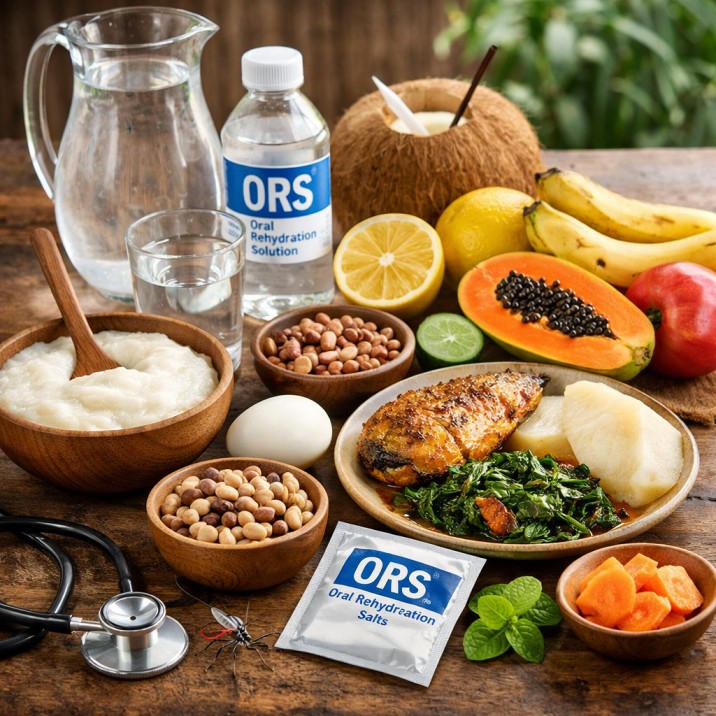
Malaria is a serious illness that can leave the body feeling weak, tired, and low on energy. While the most important step is proper medical treatment — including antimalarial drugs prescribed by a doctor — good nutrition can play a supportive role during recovery.
Eating the right foods helps your body:
- Stay hydrated
- Rebuild strength
- Support the immune system
- Recover faster after fever and chills
From both practical experience and public health guidance, simple changes in what you eat and drink during and after malaria can make a noticeable difference in how you feel.
However, food is not a cure or a replacement for medical treatment.
Why Nutrition Matters During Malaria
Malaria often causes:
- Fever and sweating
- Loss of appetite
- Vomiting or diarrhoea
These symptoms can lead to dehydration and loss of essential nutrients.
Proper nutrition helps to:
- Replace lost fluids and electrolytes
- Provide energy without stressing the stomach
- Support immune function
- Help rebuild blood and muscle after illness
Some evidence suggests that adequate intake of vitamins and minerals may support recovery and reduce complications. However, medical treatment remains the foundation of care.
Practical Nutritional Tips to Support Recovery
💧 1. Drink Plenty of Fluids (Most Important)
Fever and sweating increase fluid loss, and dehydration can worsen symptoms.
- Drink clean water regularly (small sips if nauseous)
- Use oral rehydration solution (ORS) to replace lost salts and fluids
- Try coconut water, clear soups, or diluted fruit juices (e.g., orange or lemon water)
- Aim for steady fluid intake throughout the day rather than large amounts at once
🍽️ 2. Eat Small, Easy-to-Digest Meals
Loss of appetite is common, so avoid forcing large meals.
Choose foods that are gentle on the stomach:
- Pap (porridge), rice water, or small portions of boiled yam
- Fruits like banana, pawpaw (papaya), or oranges
- Light vegetable soups (ugu, spinach) with beans or fish
- Eggs, chicken soup, or moi moi for protein
🥗 3. Include Foods Rich in Key Nutrients
Certain nutrients support recovery and overall strength:
- Vitamin C-rich foods: oranges, lemons, pineapple, guava
→ May support immune function and help with iron absorption - Protein sources: beans, fish, eggs, lean chicken
→ Help repair body tissues and rebuild strength - Zinc and vitamin A sources: carrots, ripe mango, small amounts of nuts or seeds (if tolerated)
→ Support immune health - Healthy fats: small amounts of avocado
→ Provide energy without being too heavy
🧼 4. Food Safety Comes First
Your body is already under stress, so avoid additional infections.
- Wash fruits and vegetables thoroughly
- Cook all foods properly
- Avoid raw or undercooked meat, fish, or eggs
- Limit street food that may not be hygienic
Foods to Limit During Recovery
Some foods can worsen symptoms or delay recovery:
- Very fatty or fried foods (e.g., oily akara, fried plantain)
- Spicy or heavily peppered meals
- Excess caffeine (strong tea, coffee, energy drinks)
- Sugary drinks and processed snacks
- Grapefruit or grapefruit juice (may interfere with some medications — confirm with your doctor)
A Simple Daily Approach
When recovering, keep things simple and manageable:
- Start your day with warm water or ORS
- Eat small meals throughout the day
- Example: pap with banana in the morning
- Light vegetable soup with fish for lunch
- Fruit or yoghurt (if tolerated) in the evening
- Rest as much as possible
- Eat when you feel able — do not force food
Final Thoughts
Good nutrition during and after malaria helps your body regain strength and energy. Many people notice they recover more comfortably when they focus on hydration, simple meals, and nutrient-rich foods.
Small, consistent choices are more effective than trying to eat perfectly when you are weak.
That said, these tips are supportive only. Malaria can become serious quickly — especially in children, pregnant women, and individuals with other health conditions.
⚠️ Very Important Medical Advice
This article is for general information and education only. It does not replace professional medical care.
If you suspect malaria (symptoms such as fever, chills, headache, or body aches):
- Go to a hospital or clinic immediately for proper testing and treatment
- Do not rely on home remedies or nutrition alone
- Follow your doctor’s instructions regarding medication and recovery
Seek urgent medical care if symptoms worsen, including:
- Severe headache
- Confusion
- Difficulty breathing
- Inability to eat or drink
🛡️ Prevention Still Matters
- Use insecticide-treated mosquito nets
- Clear standing water around your home
- Seek early treatment when symptoms begin
Take care of your health. Small, consistent steps support recovery — but timely medical care saves lives


